Rob Molke || Public Relations Director
“What did you do this weekend?
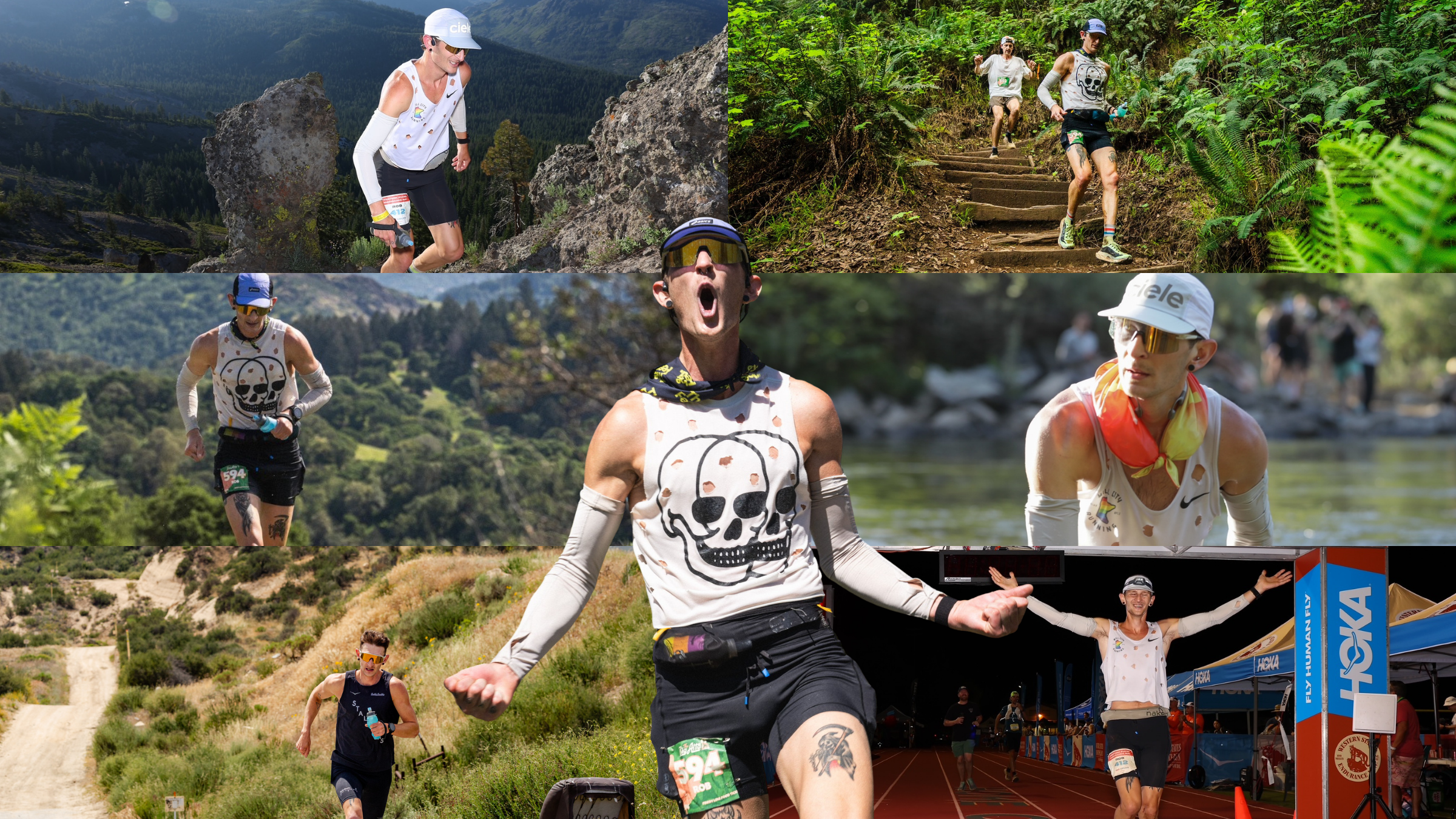
As a competitive trail and ultrarunner, my colleagues never receive a typical reply to this question from me. Answers have included traversing 100 miles through mountains and canyons by foot in northern California, competing in a 300-mile relay from LA to Vegas through the desert, and running in and out of the Grand Canyon. Chances are I’ve also managed to fit a few long bike rides and rock-climbing sessions around those activities.
Why? Well, why not.
The obvious and canned response is because I can, it teaches me about myself, and I crave the adrenaline rush only experienced after completing a tremendous physical feat. But to be honest I still don’t really know for sure. To feel something? Or am I a masochist? Choosing to enter ultra after ultra after puking my guts out following each attempt might suggest so. But whatever the reason, it allows me to bring the best version of myself to work every day and be the best teammate possible.
I’ve uniquely been able to apply skills and experiences from the trails to my emails. Here’s how:
Problem Solving
Real-time problem solving is a must-have skill in ultrarunning, especially under pressure. Over the course of a long race, it’s not a matter of “if” an issue pops up. It’s “when.” Anticipating potential difficulties and knowing how to troubleshoot them quickly and effectively is critical to success. And knowing how to adapt in the middle of a complication is even more crucial when the tools or resources needed for an easy fix aren’t available. I’m well-prepared to handle all types of day-to-day issues in my job and roll with the punches because of the learnings I’ve gained from challenges I’ve faced on the trails (trust me, I have many stories).
Positive, Measured Perspective
When I completed my first 100-mile race last summer, it changed the fabric of my being. The accomplishment gave me a clearer sense of purpose and a refreshed perspective on the world around me. I experienced ego death to a degree I hadn’t come anywhere close to before. My mindset toward the challenges I now face in my personal and work life has shifted from one of hyper fixation, anxiety, and stress around what I cannot control to one framed by a challenge’s problem in relation to the rest of the world, letting go, and moving forward as best as I’m able. That doesn’t mean I don’t care about my clients’ problems or think they aren’t important. Rather, it allows me to solve problems with a positive, measured perspective that places the problem in the context of the bigger picture.
Goal Setting
This point might seem the most obvious, but it’s worth stating for emphasis because it’s absolutely true. The goals I’ve achieved in my life prior to trail and ultrarunning have taught me a lot about goal setting, but the depth to which I now understand goal setting has exponentially grown. Goals are extremely important for motivation and purpose, but goals like completing a 100-mile race also require patience, check-ins, and trust in the process. Those dreams can only be reached by being broken down into smaller milestones along the way.
For example, completing a 100-mile race forced me to set “smaller” goals of building my weekly mileage and elevation gain over several years, completing 50K, 50-mile, and 100K races, and focusing on small wins like sleep, diet, and consistency with strength work. In the same way, I now look at my agency’s and clients’ long-term goals with a multi-step, digestible approach that strings numerous achievements together to ultimately reach the final destination.
Confidence
If pushing through delirium, self-doubt, physical ailments, and nausea 80 miles into a 100-mile race, with saliva, sweat, and snot spattered across your face, doesn’t give you a strong sense of self and teach you about who you truly are, I’m not quite sure what else will! Ever since embarking on my trail and ultramarathon journey a few years back, I’ve gained significantly more confidence in how I show up in every aspect of my life, especially work. I’m very comfortable with who I am and not afraid to show it, and that confident ethos is present in my relationships with clients, media, colleagues, and vendors, through the decisions I make at work, and in how I approach and tackle the workday ahead of me. Finishing an ultramarathon taught me how to manage the imposter syndrome that can get in the way of making big and small decisions in my areas of expertise.
Existing in Discomfort
It’s important to be physically fit for trail and ultrarunning, but the mind is the most important muscle to flex in training and on race day. Courtney Dauwalter, a Minnesota native (woo!) and arguably the greatest women’s trail and ultrarunner of all time, describes the experience of living in discomfort during a race as embracing the pain cave. The longer you exist in the pain cave, the bigger it is for the next visit. I’ve been fortunate enough to carve out my own pain cave, and it’s now a place I’m mentally able to enter during uncomfortable periods of time on the trails or in the office. I can effectively exist in and navigate uncomfortable situations at work with ease as I build out my pain cave on the trails.
Maybe I could have learned these skills through another hobby or passion. But sitting still generally isn’t for me, and I’m not very drawn to more sensible activities that could still help me learn the above skills and lessons, like reading or gardening.
And so, my takeaway for you isn’t to go run a trail race or ultramarathon (but I’m more than happy to convince you and chat about training if you’re curious). You might not be into reading or gardening, either. But I challenge you to find a creative outlet, as I have through trail and ultrarunning, that will teach you how to be the best version of you every day, at work and otherwise, because inspiring others to be their best, most authentic selves brings me so much joy. And that sounds like a pretty cool world to work and live in.